
老千
Rocket launch viewing sparks summer tourism boom in East China's coastal city_我的网站

一 |
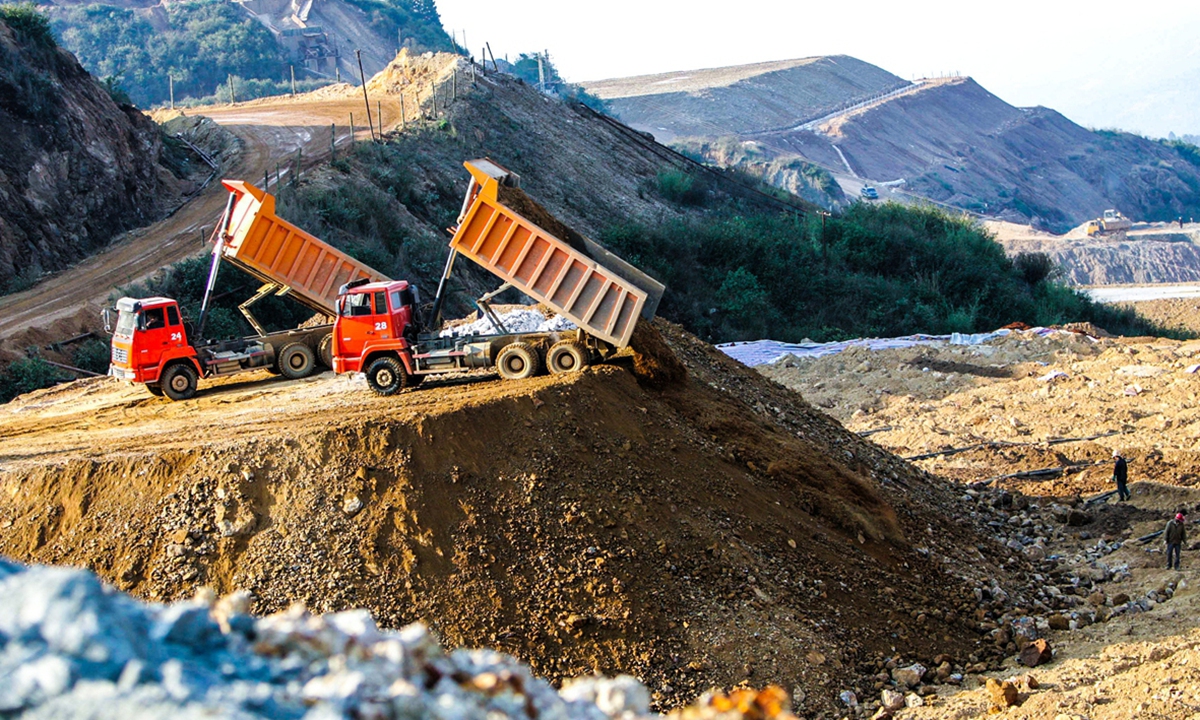
China rare-earth exports totaled 4,223.5 tons in July, and cumulative exports reached 34,706.3 tons in the first seven months of 2026, down 10 percent year-on-year, Chinese customs data showed on Friday.
Meanwhile, China imported 9,451.3 tons of rare earths in July, bringing total imports in the first seven months of 2026 to 63,323.0 tons, down 5.5 percent year-on-year, according to the data from the General Administration of Customs (GAC).
Also on Friday, China Rare Earth Group reported revenue of 1.647 billion yuan in the first six months of 2026, down 12.19 percent year-on-year, and net profit attributable to shareholders of the listed company of 237 million yuan, up 46.53 percent year-on-year.
According to the company's semi-annual report, the supply-demand landscape in the rare-earth industry continued to adjust and improve. Driven by multiple favorable factors, including rare-earth industry policies and a boost in downstream market demand, market conditions trended upward overall, it said.
In October 2025, China's Ministry of Commerce and the GAC announced export control measures on items related to superhard materials, rare earth equipment and materials, and batteries, according to a Xinhua News Agency report.
Effective from November 8, 2025, exports of items related to superhard materials, equipment and raw materials related to rare earths, five medium and heavy rare earth elements including holmium, lithium batteries, as well as synthetic graphite anode materials, will not be permitted without approval, the Ministry of Commerce stated, per Xinhua.
The ministry said that China implements export control measures in accordance with laws and regulations, which conforms to international common practice and is in line with better safeguarding China's national security and interests, and better fulfilling its international obligations, such as its commitment to non-proliferation.
Wu Chenhui, an independent analyst specializing in the critical minerals sector, told the Global Times on Friday that rare earths are strategic mineral resources. China's move to impose export controls on rare earths is in accordance with the law and is an internationally accepted practice, as well as a necessary measure to safeguard national security and the stability of industrial and supply chains.
The relevant measures taken by China have always adhered to the principles of rationality, moderation, and prudence, Wu said, adding that they are consistent with domestic laws and regulations and fully take into account the normal needs of the global civilian sector.
A spokesperson for the Chinese Ministry of Commerce said on April 9 that China remains committed to safeguarding the security and stability of global industrial and supply chains, fully taking into account reasonable civilian needs and concerns worldwide, including those of the US, and actively promoting and facilitating compliant trade.
Export applications meeting the conditions for legitimate civilian use will be approved in accordance with the law, said the spokesperson.
"China has always approved export applications that comply with the requirements and are for legitimate civilian purposes, in accordance with laws and regulations. The relevant policies are not targeted at any specific country; rather, they aim to promote the high-quality development of the rare earth industry and maintain the safety and stability of global industrial and supply chains," Wu said.
。 (ECNS) -- A sea-based rocket launch in Haiyang, Shandong Province, has attracted tens of thousands of visitors during the summer travel season. The Smart Dragon 3 Y12 carrier rocket lifted off Tuesday, sending two Dongfang Huiyan Hyperspectral satellites into orbit. Families, study tour groups and overseas space enthusiasts from countries including Germany, Russia, Malaysia and Pakistan gathered along the coast to watch. At Lianli Island’s viewing site, tourists combined launch viewing with visits to the Oriental Spaceport Science Museum and coastal activities. Interactive programs, science talks and a space-themed market enriched the experience. “Viewing sea-based launches during the summer vacation is especially valuable,” said Chen Gengyun, who traveled from Nanjing with his daughter. Haiyang has integrated rocket launch viewing with coastal tourism to create short trips for visitors, with coastal hotels and homestays largely booked one week in advance, according to local tourism authorities The Oriental Spaceport has supported 27 sea-based launches, sending 166 satellites into orbit, and attracted more than 30 aerospace projects with investment exceeding 33 billion yuan ($4.6 billion). Space tourism centered on rocket launches has become a growing trend in China, with more regions developing related experiences. (By Helen Mo, intern Liu Shuangjing)

 。
。Current article:http://www.bianhajieleigoukusunmen.pics/y53950f/20260826/252104.ppt
Published on:15:52:02
最新文章
- 日本最大进口车经销商谈为什么卖比亚迪:他们的电动车卖到了全球销量第一
- 女武神決心送天空三連敗
- 14日0时起,成都龙泉驿区、新都区、郫都区团结街道逐步有序恢复正常生产生活秩序
- California Governor Newsom is Running Ads in Florida: ‘Join Us In California’
- Ancient rock carvings found in Iraq
- 美记:上半场95%时间里火箭能与勇士抗衡 5%的时间里被他们碾压
- Man killed Muslim boy and wounded woman in hate crime motivated by Israeli-Hamas war, police say
- 水利部:珠江流域北江韩江可能再次发生编号洪水
- 欧盟本想“联手抗中”,结果法德又掐起来了,观察者网,欧盟本想“联手抗中”,结果法德又掐起来了
- China-Europe freight trains deliver over 34,000 cooling appliances
标签云