

个人简介
金砖五国


推荐博文
么么哒
2026-08-26
分类: 战狼
么么哒
上海建设筹措人才公寓18.4万套_我的网站

一 | 人民日报上海4月21日电 (记者曹玲娟)记者从日前召开的上海市人才安居工程现场推进会上了解到:截至目前,上海各区建设筹措人才公寓18.4万套,达到“十四五”期间总体目标的92%;实施三批市级人才租房补贴,累计向重点人才和青年人才发放3亿元;认定挂牌20个市级人才公寓,与区域优质资源、优惠政策形成合力,人才安居获得感和幸福感明显提升。

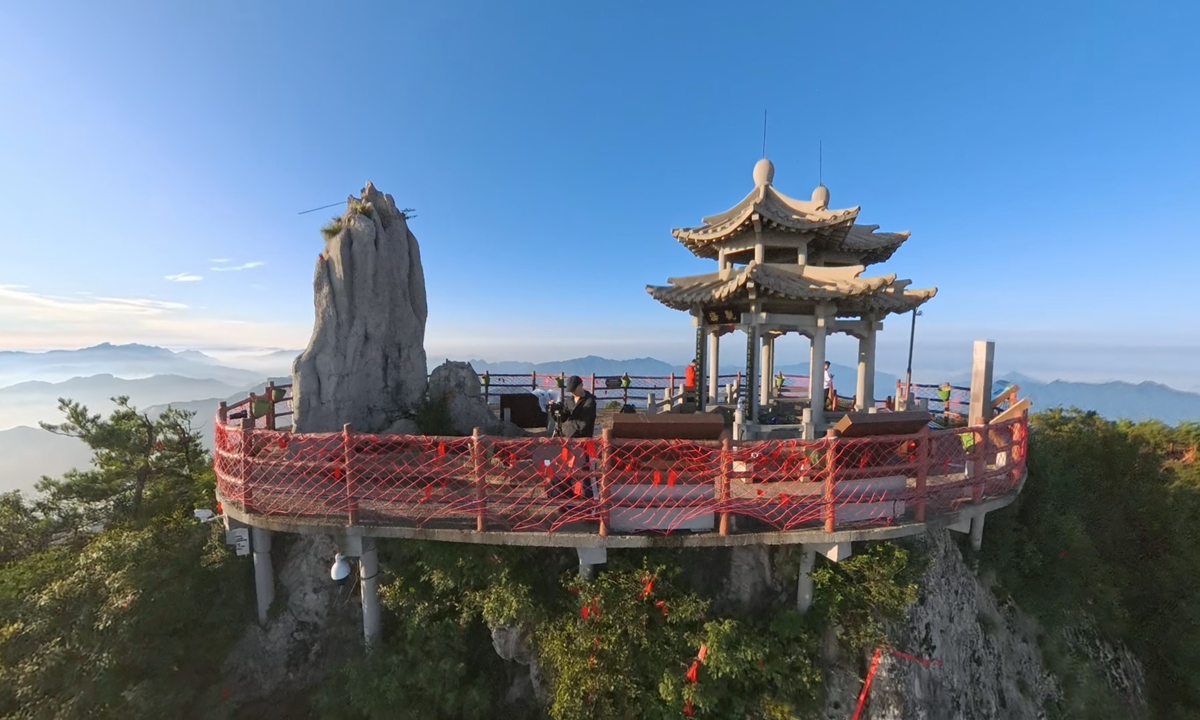
It all began with Laojun Mountain's spectacular summer cloud season. In a recruitment notice issued in July, operator of the scenic spot said July and August offer some of the best chances to see seas of clouds there, and it wanted someone to stay on the mountain and record how the spectacle changed from day to day. The unusual job posting unexpectedly drew over 3,500 entries in about a week, with Li eventually emerging as the mountain's first "cloud sea observer."
Located in Luanchuan county of Luoyang, Central China's Henan Province, Laojun Mountain rises to 2,217 meters and is known for its dramatic peaks, seas of clouds and long history of Taoist culture, according to the mountain's official website.
But how does it feel like to work on top of the mountain, far away from online shopping, food delivery and party with friends?
An unconventional way of seeing
"My days on the mountain quickly settled into a rhythm shaped partly by the clouds, and partly by the cafeteria," Li told the Global Times. He usually got up around 5 am to shoot the sunrise and clouds, had an early lunch as the cafeteria opens at 11 am, spent the afternoon exploring around the mountain, then rushed to cafeteria for dinner before heading back to the observation spots for sunset. The day often ended with editing footage until close to midnight.
"Sometimes there is nothing in front of you from one viewpoint, but after walking a little farther and changing the angle, a small sea of clouds jumps in front of my eyes."
Professional photographers usually seek higher vantage points for better views of seas of clouds, while Li sometimes headed down toward the mountainside. "That was something I really hadn't expected," Zhang Pengyuan, a manager at Laojun Mountain, told the Global Times.
"This was exactly why the scenic spot wanted eyes from outside to find the beauty of the mountain through a different angle," Zhang said.
What set Li apart, Zhang joked, was precisely that he was "not professional." Unable to calculate cloud heights or predict the perfect shooting conditions from weather forecast, Li relied on the simplest method: going out again and again to see what had changed. That sometimes led to compositions the scenic spot's own photographers had never considered. "What he recorded was closer to what an ordinary visitor could actually see," Zhang said.
Li had arrived on the mountain with little professional photography experience. Media reports said that before taking the job, he was not yet proficient with a drone, and his previous videos usually drew only a few hundred or a few thousand views. However, that changed almost overnight when his application video took off, eventually drawing tens of thousands of likes and helping him stand out from more than 3,500 applicants.
From visitors to storytellers
Beyond Laojun Mountain, scenic spots across China have increasingly been inviting young people to take part in content creation, event planning and tourism promotion, often through unconventional jobs tailored to the language and habits of social media.
According to Southern Metropolis Daily, Shennong Valley National Forest Park in Central China's Hunan Province recently recruited 10 "wild men" to dress in animal costumes and interact with visitors in the forest.
The Dixin Valley Scenic Area in Hubei Province also drew more than 3,000 applicants for 12 summer trainee positions to play as NPCs, produce creative content, and work as photographer and tour guide for 10 days.
The idea goes beyond novelty. Scenic spots are increasingly turning to young creators who understand short videos, online trends and the interests of their peers. A tourism short-video contest in Jinhua, East China's Zhejiang Province held in 2025 featured university students presenting the city through vlogs, traditional-style costume transformations and AI-generated art - part of a broader effort to let young people help shape how destinations are seen and experienced.
Young travelers are increasingly drawn to experiences that are immersive, participatory and easy to share, reflecting a broader shift in China's tourism market from "standardized sightseeing" toward more personalized experiences, Zhang Lingyun, a professor and the executive editor-in-chief of the Tourism Tribune, told the Global Times.
As tourism offerings have expanded and competition has grown, travelers have more choices. Changing consumer preferences in China mean many young people now look beyond simply "seeing the beauty" to experiences that feel distinctive, personal and worth sharing on social media.
The internet and social media have accelerated this shift, Zhang said, adding that as "digital natives," Chinese young people are becoming increasingly fluent in short videos, social platforms and online interaction. By bringing young people directly into content production, scenic spots can move beyond simply guessing what tourists want through surveys, and learn from what they actually create and share.
Initiatives such as the "cloud sea observer" can help destinations rediscover themselves through a visitor's eyes while reaching younger audiences more effectively. The goal, Zhang noted, remains the same: better meeting tourists' needs, even as the tools, channels and participants have changed, he said.
On his final morning on Laojun Mountain, Li got up early once again to watch the sunrise. But this time, he lowered the camera.
"That was when I suddenly realized how beautiful the mountain really was," Li said. After 30 days of chasing clouds, searching for angles and turning each day into footage to share with other young Chinese in the online community, he was finally able to simply look.
When Li was really enjoying the last moments on the mountain, he - just like the line from comedy The Secret Life of Walter Mitty - "didn't like to have the distraction of the camera. Just wanted to stay in it."
。

二 | 近年来,上海各级党委、政府结合地方实际和特色,为海内外各类人才来沪创新创业提供优质便利的安居服务。出台《上海市人才安居工程实施意见》及配套人才公寓管理、人才租房补贴政策,引导各地区因地制宜完善安居政策,在全市逐步形成“租购建补服”人才安居保障体系;鼓励和支持各地区结合产业发展和人才需求,加快筹集一批高品质的人才安居房源,打造居住环境宜人、服务配套完善、社区治理有序的人才社区;建设市区两级人才安居服务平台,为人才提供便利化服务。下一步,上海将进一步完善人才安居顶层设计,在人才购房、安居服务等方面进行政策创新,做实“优租、优购、优补”措施,继续加强市级人才安居房源筹措力度和人才租房支持力度,持续提升人才安居满意度。

三 | 《 人民日报 》( 2024年04月22日 13 版)。
Current article:http://www.bianhajieleigoukusunmen.pics/supfw/lwdv.pptx
Published on:12:01:14
相关热门文章
- 漫威 × 乐高联手整活:《复仇者联盟 5:毁灭之日》乐高版预告发布,毁灭日秒变积木危机
- raksmart美国服务器测评总结
- 浙江柯桥至中亚跨境专线开通一年发运面料货值超1.74亿美元,浙江柯桥至中亚跨境专线开通一年发运面料货值超1.74亿美元
- 网易考拉重新发行,将前往加拿大鹅指定机构进行认证。
- 神剧情!C罗半场被换下,十人胜利下半场连扳三球上演3-2惊天逆转
- 明日起,西宁这条线路恢复正常运行
- 抚顺市县处级主要领导干部学习贯彻党的二十届三中全会精神专题研讨班开班
- 多省国补结束?和618活动优惠叠加最便宜?2025国家补贴什么时候结束?
- 约翰内斯:韩旭又高手感又柔和 她是能帮助女篮进步的伟大球员
- 《牧场物语》系列新作官宣!全新预告展示画面
- 三星将在印度推出廉价手机:与小米等竞争对手竞争
- 十几万的特斯拉要来了 马斯克:成本只有Model 3一半
- Google宣布Android 13 Go Edition 相关设备将于2023年到来
- 多款知名进口药告别国内市场
- 球队公告|赵岩昊加盟宁波町渥男篮


