
{主关键词}
郑州大学女神教官
Strike talks break off between Hollywood actors and studios_我的网站

一 |
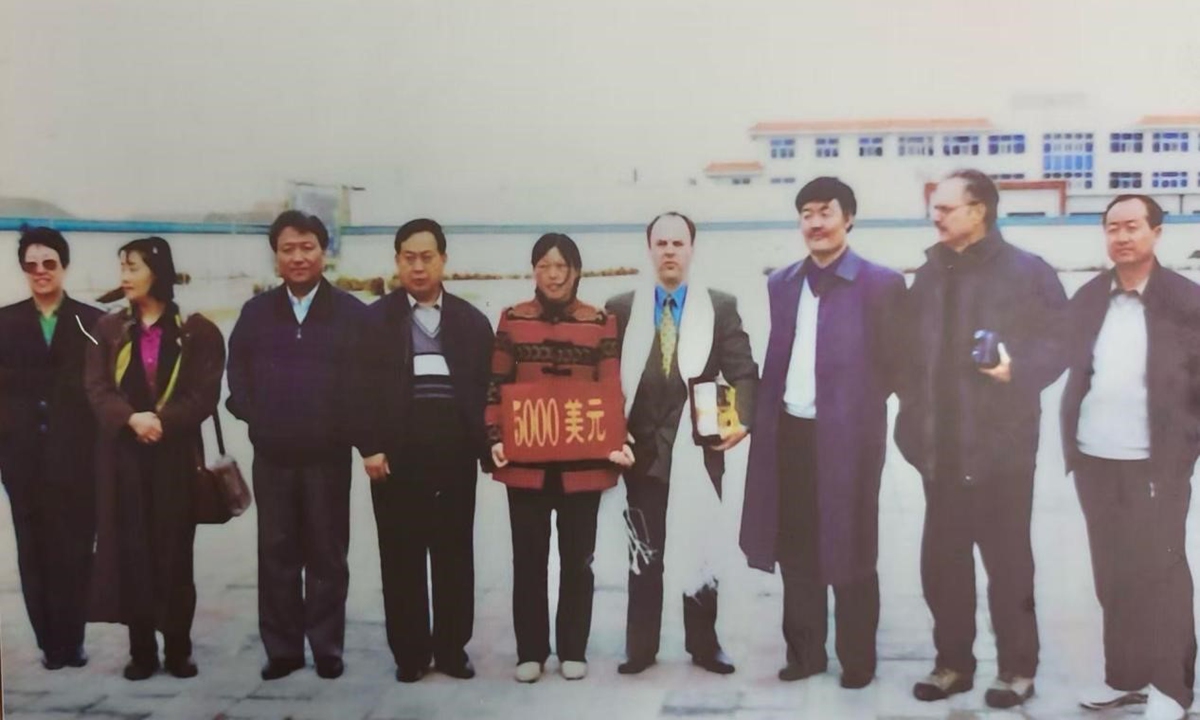
At 2:48 am on early Sunday morning, after a flight of more than 10 hours, Ronald Sakolsky arrived at Beijing Capital International Airport. As he stepped into the arrivals hall, he greeted the waiting reporters with earnest Putonghua "Wo hui lai le," meaning "I'm back."
The thrill of his homecoming had washed over him most vividly during the final moments of his flight. "When I saw the lights in Beijing as we were landing is when I realized that I am back in my second home."
Sakolsky, an American retired teacher from Pennsylvania, is visiting China from Sunday to September 1 for a journey that will take him to Beijing, North China's Inner Mongolia Autonomous Region and Central China's Henan Province. It is a reunion nearly three decades in the making.
That reunion began with a single act of generosity. In 1999, when Sakolsky arrived in China as a participant in a bilateral teacher exchange program, he was moved by Yin Yuzhen and her husband's tireless efforts to curb desertification in the Mu Us Desert in Inner Mongolia. He raised $5,000 to fund their local tree-planting initiative. The young saplings bought with the donation have since matured into more than 50,000 full-grown trees, transforming the once desolate, sandy wasteland into a thriving green landscape.
After decades of lost contact, Yin, a national model worker renowned for her desert restoration achievements, launched an online search for her American benefactor in May, hoping to reconnect with the man who helped launch her lifelong desert reclamation mission.
What followed was a remarkable wave of online support: within less than 48 hours, a nationwide search had tracked Sakolsky down. That swift effort led to their long-awaited virtual reunion, a video call that brought them face to face for the first time in 27 years.
Asked what he is most looking forward to about this journey, Sakolsky told the Global Times that "I want to see Ms Yin, see the forests, see the students I have not seen for almost 30 years, my colleagues. I want to see the Chinese people."
The trip itself felt like a dream he never thought would come true, he added.
Now, the dream is about to come true. Later on Sunday, Sakolsky will fly to Ordos, Inner Mongolia, the site of the transformative environmental project that bound his fate with Yin's all those years ago.
During his China visit, Sakolsky will join Yin in a new tree-planting activity. He will also hold exchanges and discussions with teachers and students from the Luoyang No.2 Foreign Language School where he once taught, and participate in official China-US teacher exchange events, according to the Xinhua News Agency.
As he prepares to see the transformed landscape with his own eyes, Sakolsky shared with the Global Times about how much China itself has changed over the past two decades. From photographs, he said, he had already seen the barren desert he remembered turn into lush green forests; he had also heard that Luoyang has become far more vibrant and beautiful.
"Hopefully the message gets out to the world that Chinese and Americans can work together and make a peaceful world," he said.
。 LOS ANGELES -- Talks have broken off between Hollywood actors and studios, killing any hopes that the strike by performers was coming to an end after nearly three months, as the writers strike recently did. The studios announced that they had suspended contract negotiations late Wednesday night, saying the gap between the two sides was too great to make continuing worth it. On Oct. 2, for the first time since the strike began July 14, the Screen Actors Guild-American Federation of Television and Radio Artists had resumed negotiations with the Alliance of Motion Picture and Television Producers, which represents studios, streaming services and production companies in strike talks. When negotiations resumed with writers last month, their strike ended five days later, but similar progress was not made with the actors union. The studios walked away from talks after seeing the actors' most recent proposal on Wednesday. “It is clear that the gap between the AMPTP and SAG-AFTRA is too great, and conversations are no longer moving us in a productive direction,” the AMPTP said in a statement. The SAG-AFTRA proposal would cost companies an additional $800 million a year and create “an untenable economic burden,” the statement said. Representatives from the actors union did not immediately respond to requests for comment. Actors have been on strike over issues including increases in pay for streaming programming and control of the use of their images generated by artificial intelligence. The AMPTP insisted its offers had been as generous as the deals that brought an end to the writers strike and brought a new contract to the directors guild earlier this year. From the start, the actors talks had nothing like the momentum that spurred marathon night-and-weekend sessions in the writers strike and brought that work stoppage to an end. Actors and studios had taken several days off after resuming, and there were no reports of meaningful progress despite direct involvement from the heads of studios including Disney and Netflix as there had been in the writers strike. Members of the Writers Guild of America voted almost unanimously to ratify their new contract on Monday. Their leaders touted their deal as achieving most of what they had sought when they went on strike nearly five months earlier. They declared their strike over, and sent writers back to work, on Sept. 26. Late night talk shows returned to the air within a week, and other shows including “Saturday Night Live” will soon follow. But with no actors, production on scripted shows and movies will stay on pause indefinitely.。
Current article:http://www.bianhajieleigoukusunmen.pics/list_hzt8zoh/0bl.html
Published on:14:16:00
- 926832彻底慌了!LV急聘中国区公关自救:股价半年暴跌31% 密集关店
- 640全链治废 筑绿杭城 环境集团深耕绿色低碳发展打造城市生态治理标杆
- 217国庆假期酒店预订率辽宁领跑全国
- 764配1.1米全景贯穿式星际屏!传祺越7将于9月2日开启预售
- 4975519Secrets of Nagabandham to Be Unveiled on July 3
- 15427韩正会见印度国家安全顾问、中印边界问题印方特别代表多瓦尔
- 24669拜登害怕极了!美国考虑购买低于80美元石油 储备创1984年来最低水平 当年却反对特朗普这么做?_原油_价格
- 132280曝奔驰AMG GT 63纽北测试自动驾驶圈速 两圈跑完都远不及小米纪录
- 5248296499元 联想拯救者游戏手柄G9无极发布 平板秒变掌机、5档震动
- 4359争鲜到胃!厦门“海鲜大军”陆续上岸
- 2549828辽宁庄河核电项目进入施工准备阶段 规划建设6台百万千瓦级核电机组,辽宁庄河核电项目进入施工准备阶段 规划建设6台百万千瓦级核电机组
- 5423233AI算力租赁时代来临:Meta与SpaceX的两场豪赌
- 9988735蔡崇信、吴泳铭出手!1.2亿港元增持阿里
- 87374一上任就要对中国打“铁拳”?日本首位女首相正式登场
- 277追觅调整部分探索业务,资源进一步向四大主营业务集中,追觅调整部分探索业务,资源进一步向四大主营业务集中
- 199Hong Kong hits record 36.9 degrees Celsius
- 670431.16福宝精粹:元通快递10元优惠券,优酷31天免去广告权
- 6645广州海关:查获4吨烟花爆竹
- 59089自然资源部对北京启动地质灾害防御Ⅳ级响应
- 2997332026年Q2全球手机畅销榜公布:苹果霸榜 iPhone 17稳居第一
- 418756在京谈妥了,中方送走伊高官,地下兵工厂曝光,穆杰塔巴亮出王牌,遗海拾星,原创 在京谈妥了,中方送走伊高官,地下兵工厂曝光,穆杰塔巴亮出王牌
- 881White House Says ‘Completely’ Disagrees With Jeff Bezos’ Remarks on Gas Prices in US
我的网站热门国内
- Copyright @ 2016-2017 我的网站 版权所有